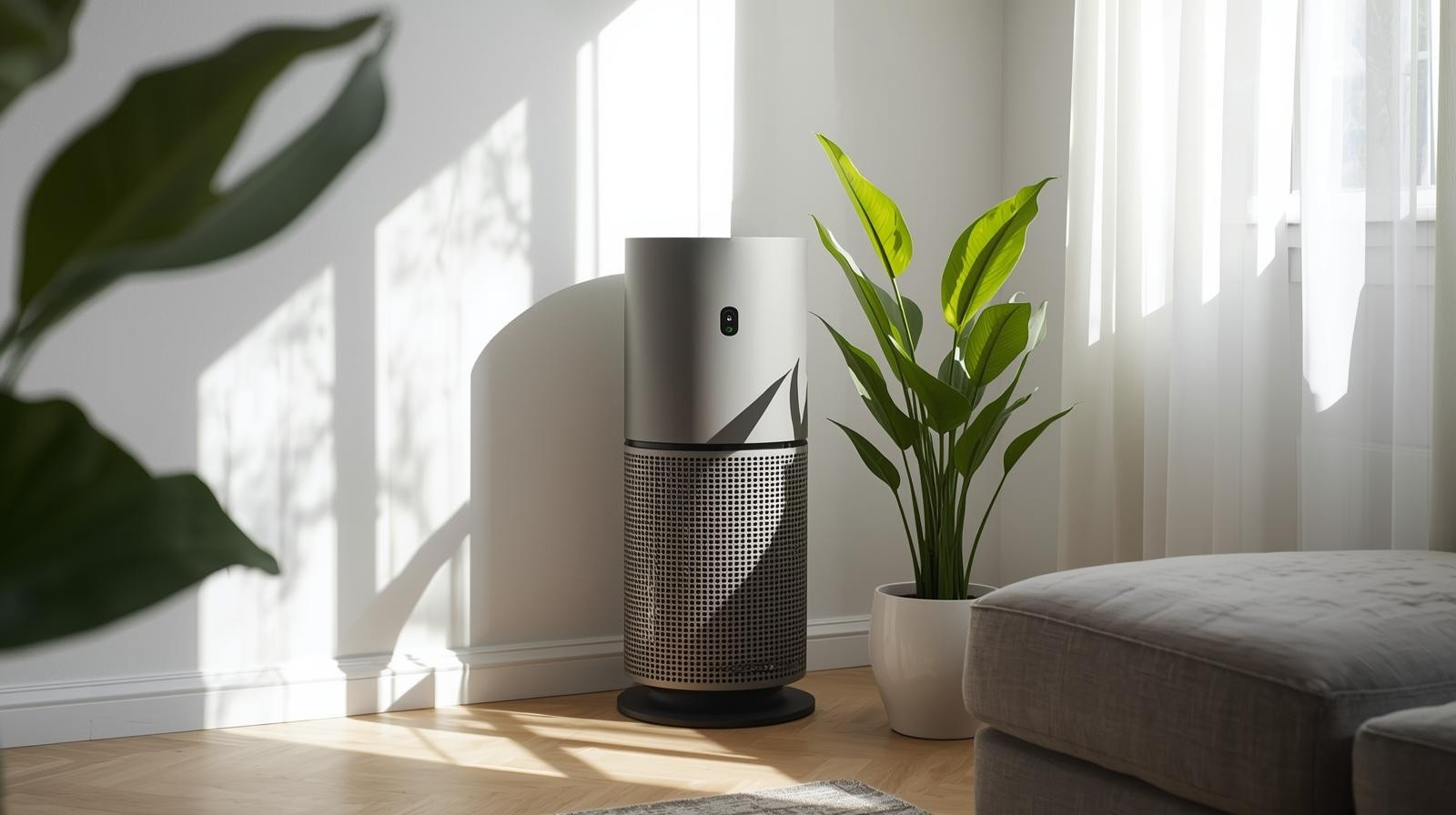
Moisture first, product second
Best dehumidifiers for damp & mould (UK)
Before buying anything, confirm that excess humidity is the problem and deal with leaks, ventilation and moisture sources. Then compare a dehumidifier that suits the room and how you will use it.

Last updated: February 12, 2026 · Wild & Well Editorial Team
Understand the basics
Air purifiers help most when they match the room size and run consistently.
Educational info only — not medical advice.
Why it matters
- Air is a constant exposure, especially overnight — small irritants can add up in sensitive households.
- For allergies, lowering airborne particle load in bedrooms can support comfort for some people.
- Purifiers don’t fix damp: moisture control (ventilation/dehumidification) is often the first lever.
Common causes
- Cooking emissions without extraction (especially frying).
- High humidity and condensation leading to mould risk.
- Dust reservoirs: carpets, bedding, soft furnishings, pets.
- Fragranced sprays/candles in small or poorly ventilated rooms.
First steps (no spend)
- Ventilate after cooking and showers (short, targeted window openings can help).
- Address moisture sources first (drying laundry, leaks, extraction fans).
- Start in the bedroom: wash bedding regularly and reduce dust traps where practical.
How it can affect health
- Particles and allergens can aggravate hay fever and asthma symptoms in sensitive people.
- Damp/mould can irritate airways and worsen cough/wheeze for some people.
Start here
- Measure the room (m²) and pick a purifier sized for that space.
- Run it regularly — a great unit switched off does nothing.
- Budget for filters (HEPA + carbon) if you’re sensitive to odours.
What to look for
- A true HEPA filter and a clear CADR/room-size recommendation.
- Quiet mode you’ll actually tolerate at night.
- Easy filter availability (and transparent pricing).
Avoid
- Units that are too small for the room.
- No mention of filter pricing or replacement schedule.
- Overpaying for features you won’t use (apps, extra features).
How we evaluate
- Room fit (room size guidance / airflow/CADR if published) and where you’ll place it.
- Noise and comfort in real use (sleep mode, vibration, lights).
- Replacement filters and how easy they are to buy in the UK.
- Energy use if it runs for long periods.
When it’s not worth buying
- If the issue is an active leak or structural damp: fix the moisture source first.
- If you can’t ventilate at all: devices help, but fresh-air exchange still matters.
- If replacements are hard to get: you’ll end up with a dead device.
- Filters are the ongoing cost — check replacement prices before buying.
- If you need odour control, carbon capacity matters (and costs more).
Enter pack price and your replacement frequency to estimate ongoing cost.
Enter watts and hours/day to estimate running cost. Use the rate from your bill if you know it.
10‑second decision
Pick the rule that matches your situation.
If: The room is cold or you mainly dry laundry indoors
Then: Compare desiccant dehumidifiers as well as compressor models.
Check energy use and noise for the way you expect to run it.
If: The room is reasonably warm with recurring condensation
Then: A compressor dehumidifier may be a practical everyday option.
Compare extraction capacity, humidistat control and running cost.
If: You are not sure humidity is actually high
Then: Measure first with a hygrometer before buying a dehumidifier.
If: There is a leak or obvious building defect
Then: Fix the moisture source first.
A dehumidifier manages moisture; it does not repair the cause.
How Wild & Well makes these shortlists
We focus on the boring stuff that drives outcomes: sizing, noise, filter costs, and what actually fixes the problem.
- Buyer-friendly: small sets, clear trade-offs, and what to skip.
- Cost-aware: filter/replacement costs are treated as part of the price.
- UK-first: availability, voltage, and typical UK homes (flats, damp winters, etc.).
Pick your route
Not sure what to do next? Choose the path that fits your home and your goals.
Explore: Air quality
Start hereStart with the basics and avoid the common mistakes before you buy.
Read: Damp & mould renters playbook
GuideA practical guide that explains what to do first (often cheaper than buying).
Compare: Winter humidity guide
CompareA related shortlist for a different use-case, if your home is different.
1. Measure
Use a hygrometer in the rooms where condensation, damp or laundry drying is a problem. One reading is less useful than a pattern over several days.
2. Find the source
Cooking, showers, indoor laundry, poor ventilation and leaks are common moisture sources. Address those before relying on equipment.
3. Match the machine
Compare type, extraction capacity, noise, tank or drainage setup and energy use for the room where it will actually run.
Which type should you compare?
| Type | Often considered for | Main trade-off | Check before buying |
|---|---|---|---|
| Desiccant | Colder rooms and laundry drying | Can use more energy | Noise, laundry mode, energy use |
| Compressor | Warmer rooms and recurring condensation | Performance can fall in colder rooms | Extraction capacity, humidistat, drainage |
| Mini / Peltier | Very small enclosed spaces | Often too weak for significant household damp | Realistic extraction rate |
Current partner options
Compare a few suitable dehumidifiers, not a giant product grid
These are current Wild & Well partner options from the main air-quality shortlist. Check room suitability, noise, extraction rate, drainage and running cost on the merchant site before buying.
MeacoDry ABC 10L Dehumidifier
HumidityMeaco UK partner link.
- Target humidity ~40–60%
- Use for laundry drying + damp control
- Check noise + running cost
MeacoDry Arete® One 10L Dehumidifier & Air Purifier
HumidityMeaco UK partner link.
- Target humidity ~40–60%
- Use for laundry drying + damp control
- Check noise + running cost
MeacoDry Arete® One 12L Dehumidifier & Air Purifier
HumidityMeaco UK partner link.
- Target humidity ~40–60%
- Use for laundry drying + damp control
- Check noise + running cost
Need more choice?
The central Air Quality shortlist holds the maintained set of partner dehumidifiers, replacement filters, purifiers and airflow products.
FAQ
Quick answers to the questions people usually have before buying.
Is a dehumidifier worth it for damp?
Often yes — especially if you see condensation, musty smells, or mould risk. It reduces indoor humidity so surfaces stay drier.
What size dehumidifier do I need?
Match the unit to the room size and how wet the home is. Laundry drying indoors usually needs more capacity.
Do I need an air purifier as well?
Not for moisture. A purifier helps particles; a dehumidifier targets humidity. Start with the tool that matches your problem.
How much does it cost to run?
It depends on the unit, target humidity, and how wet the home is. Many homes only need it a few hours a day once humidity is under control.
Should I buy a desiccant dehumidifier?
Desiccant models can be better in colder rooms but may cost more to run. Compressor models are common for typical heated UK homes.
Will it stop mould permanently?
It can reduce risk, but you also need ventilation, fix leaks, and treat existing mould safely.
Update log
Last updated: February 12, 2026 · Previous: February 2, 2026
What changed in this update
- Refreshed this shortlist for availability and clarity.
- Added best‑for badges, a trust block, and a clearer “pick your route” section.
- Upgraded FAQs to an expandable section with automatic FAQ schema.
We update shortlists when availability, pricing, or guidance changes.
Next step
Learn first, then compare the current options
This page answers a specific search question. Wild & Well keeps the current partner choices in one maintained shortlist so older guides do not become competing or stale product catalogues.
Make one change at a time so you can tell what actually helped.
Free: Wild & Well Shopping List
A beginner-friendly shortcut for water, air, sleep, movement, nutrition and a lower-tox home.
By subscribing you agree to our privacy policy. Unsubscribe anytime.
Some links are affiliate links. If you buy via them, Wild & Well may earn a commission at no extra cost to you.