
Understand first
Education-first • not medical adviceWhy this matters (expanded)
What’s going on
The purchase price is only one part of a product decision. Filters, cartridges, electricity, servicing and other recurring requirements can change which option is genuinely good value over time.
Why it matters
A product that looks cheaper at checkout can become the more expensive choice if consumables are costly, hard to source or replaced frequently. Ownership cost also matters because an appliance or filter you stop maintaining cannot do its intended job well.
Common causes
- Comparing headline purchase price without pricing consumables.
- Assuming the longest quoted filter or cartridge life will match real use.
- Ignoring electricity, servicing, replacement parts or UK stock availability.
No-spend first steps
- Write down the exact replacement part before buying.
- Estimate how many replacements a normal year of your use would require.
- Check whether the required part is currently easy to source in the UK.
If you’re buying anything, use this calm checklist
- Compare first-year and ongoing cost, not just checkout price.
- Prefer maintainable products with clearly identified replacement parts.
- Do not buy a feature-rich product if the ongoing cost makes you unlikely to maintain it.
General information only. If you have symptoms or a medical condition, consult a qualified clinician.
When comparing dehumidifiers, the obvious question is often: how much will it cost to run?
The answer depends on more than the wattage printed on the product page. Runtime, room conditions, capacity and humidity control all matter.
The basic cost calculation
To estimate electricity cost, use:
power in kilowatts × hours used × your electricity unit rate
For example, a 250 W appliance is 0.25 kW. If it ran continuously for four hours, it would use about 1 kWh before allowing for cycling or automatic control.
Your actual cost depends on your current tariff, so use the unit rate shown by your energy supplier rather than an old national average.
Use the free dehumidifier running-cost calculator to enter the appliance wattage, your expected daily runtime and the unit rate from your electricity bill. It shows estimated daily, 30-day and annual costs, so you can compare realistic usage patterns rather than relying on a retailer's headline figure.
Why lower wattage is not automatically cheaper
A smaller machine may draw less power while running but need to run for much longer if it is undersized for the moisture load.
A larger unit may use more power at a given moment but remove moisture faster and cycle off sooner.
This is why capacity and workload matter as much as headline wattage.
Four things to compare
1. Moisture load
Drying laundry indoors, persistent condensation and several damp rooms create a larger workload than occasional bedroom condensation.
2. Rated extraction capacity
Compare the litres-per-day rating, but remember that laboratory ratings are usually measured under controlled conditions. Real UK home performance varies with temperature and humidity.
3. Humidistat and automatic control
A machine that can maintain a target humidity and cycle rather than run unnecessarily can be easier to manage than one you simply leave running continuously.
4. Where you will use it
Running one appropriately sized machine in the area that needs it can make more sense than moving an undersized unit around the house all day.
Laundry changes the equation
If your main reason for buying is drying clothes indoors, read Dehumidifier for Drying Clothes Indoors UK. A laundry workload can justify a different capacity choice than occasional condensation control.
Do not ignore purchase price and lifespan
Running cost is only one part of ownership. Also compare:
- purchase price;
- warranty;
- filter cleaning or replacement requirements;
- noise;
- expected usage pattern;
- whether the unit is appropriately sized.
A cheap-to-run machine that is too weak to solve the problem is not necessarily good value.
Should you buy one at all?
If humidity is only briefly elevated after cooking or showering, ventilation and extraction may solve the problem without another appliance.
For persistent condensation, start with Condensation on Windows UK and Damp & Mould in UK Rentals.
When a dehumidifier is justified, compare capacity and use case in our best dehumidifiers UK guide and maintained Air Quality shortlist.
Last updated: August 27, 2026
Make the next decision easier
Occasional Wild & Well notes with practical actions, useful comparisons and no-pressure product guidance.
By subscribing you agree to our privacy policy. Unsubscribe anytime.
Related reading
Keep learning — then choose the simplest next step.
 Explainer
Home strength basics for busy people
A simple UK home-strength framework using bodyweight first, progressive resistance second and the smallest routine you can repeat.
 Explainer
Food labels without the noise: a practical UK guide
How to compare UK food labels using ingredients, per-100g nutrition, front-of-pack colours and serving size without turning shopping into a nutrition exam.
 Insight
Air Purifier for Pet Dander UK: A Healthier-Home Guide
Evidence-led UK guidance for reducing pet-allergen exposure at home, choosing an air purifier, cleaning routines, bedroom boundaries and filter costs.
 Explainer
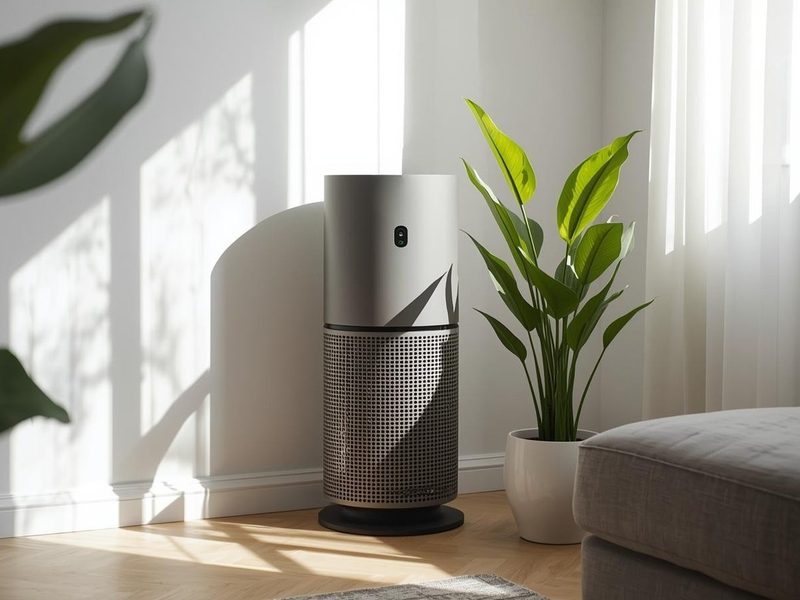
Air Purifier for Pollen UK: What Helps During Hay Fever Season?
A practical UK guide to reducing pollen indoors, deciding whether an air purifier is worthwhile, sizing it for a bedroom and budgeting for filters.
 Insight
Dog Supplements UK: An Evidence-First Guide to Claims and Labels
How to assess UK dog supplements for joints, digestion, skin and general wellness without confusing ingredient marketing with product evidence.
 Insight
Healthy Weight and Exercise for Dogs UK: A Practical Routine
A UK guide to dog body condition, portions, treats, daily movement, tracking and signs that need veterinary advice.