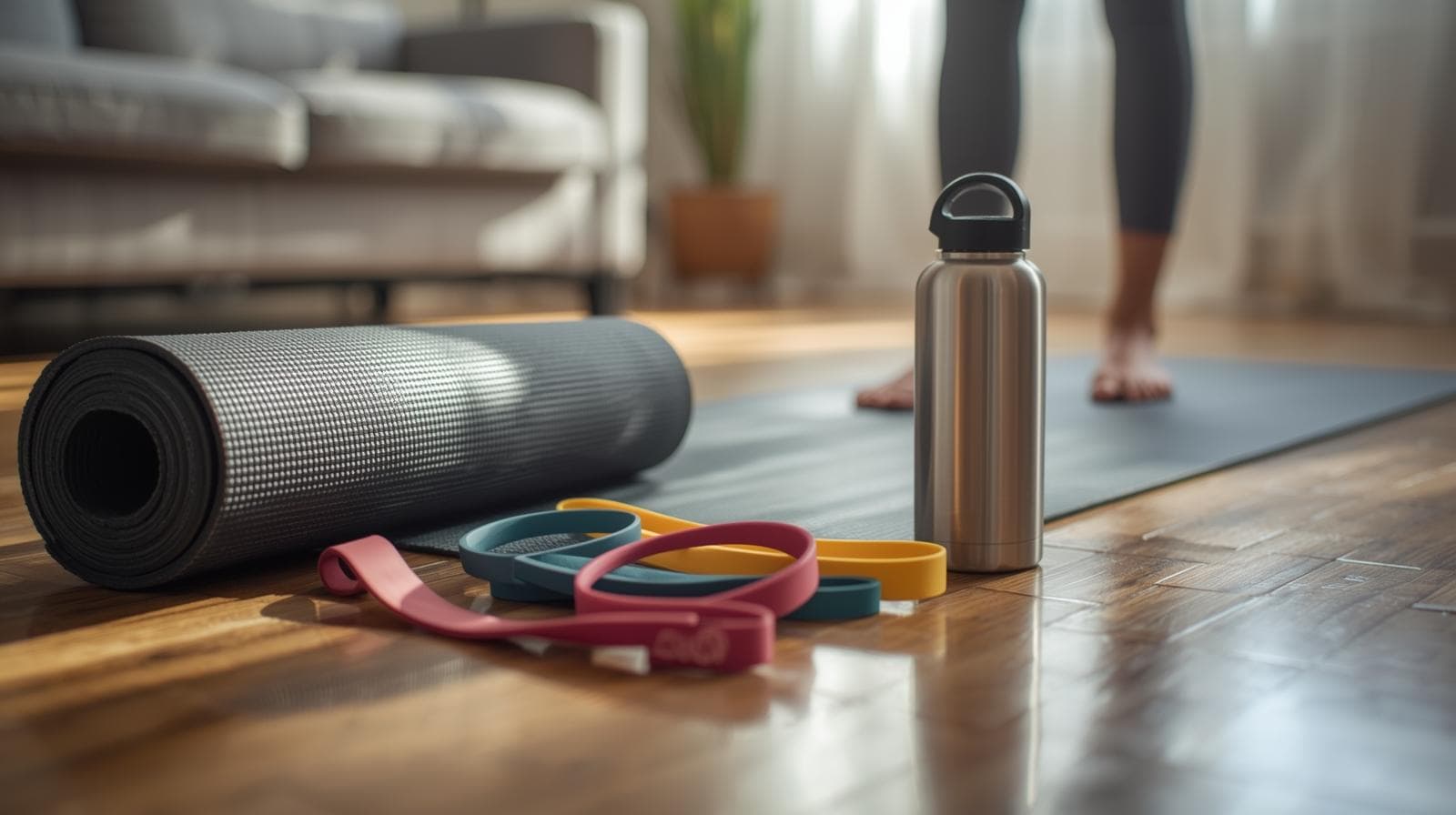
Movement (Walk + Strength + Mobility)
Build the base first (steps), then add simple strength and mobility. Most “fitness plans” fail because they ask for too much too soon.

Last updated: February 13, 2026
Movement — build a base layer before buying gear
Movement is a daily practice. A little, often, beats occasional “hero workouts”.
For most people, the most sustainable stack is: steps + 2 strength sessions + a little mobility.
Educational information only — not medical advice. If symptoms are severe, persistent, or worrying, use NHS guidance or speak to a clinician.
Why it matters
- Regular movement supports energy, mood, sleep, and long‑term health.
- Strength work supports joints and muscle mass as you age.
Common causes
- Trying to do too much too fast → injury or burnout.
- All‑or‑nothing thinking (“if I can’t do 60 minutes, I won’t do anything”).
- Relying on motivation rather than routine and cues.
Quick check at home
- Can you hit a consistent “minimum” on busy days (e.g., 20‑minute walk)?
- Is your plan realistic for your schedule and energy?
How it can affect health
- Walking and strength training can support cardiovascular and metabolic health.
- Consistent movement often improves sleep quality for many people.
First steps (no spend)
- Set a daily step “floor” you can hit 5–6 days/week.
- Add two 20–30 minute strength sessions per week (bodyweight is fine).
- Do 5–10 minutes of mobility most days (hips, ankles, spine).
- If you have chest pain, dizziness, or concerning symptoms with exercise, seek medical advice.
At a glance
Base layer (daily)
- Aim for a daily walk (even 10–20 minutes counts).
- Track steps for awareness, not perfection.
- Add hills or brisk segments once the habit is stable.
Strength (2×/week)
- Push, pull, squat/lunge, hinge, carry/core.
- Start with bodyweight + a band; add load slowly.
- Leave 1–2 reps “in the tank” most sessions.
Common mistakes
- Starting too hard, too fast (then stopping).
- Buying gear before building the habit.
- Ignoring sleep and recovery when training volume rises.
Options (compare links)
A few low‑friction tools that can make consistency easier (not mandatory).
Resistance bands set
StrengthSmall, cheap, and versatile for rows, presses, rehab, and mobility.
- Choose a range of tensions
- Keep them visible
- Use 2×/week
Walking shoes
StepsComfort-first shoes for regular walking — fit and comfort beat hype.
- Try on and walk around
- Consider returns
- Use them daily
Fitness tracker (beginner)
AwarenessSteps and sleep trends can help you stay honest — don’t obsess over daily numbers.
- Use for trends
- Charge consistently
- Turn off noisy notifications
Yoga mat
MobilityA comfortable base for mobility, stretching, and floor work.
- Grip matters
- Choose thickness for joints
- Keep it accessible
Common questions
Short answers to the questions that come up most often.
What matters more: steps or workouts?
For most people, both help — but daily steps are often the easiest “base layer” to build first.
Two short strength sessions per week is a realistic next step once walking feels consistent.
How much strength training do I need?
A simple minimum: 2 sessions per week, covering push, pull, squat/lunge, and hinge patterns. Consistency beats complexity.
Do I need equipment?
No. Bodyweight and a resistance band can go a long way. Equipment is optional — it’s there to reduce friction, not create it.
How do I avoid injury when starting?
Increase volume gradually (10–20% per week), keep most sessions easy, and don’t add lots of new things at once.
Some links are affiliate links. If you buy via them, we earn a commission.