
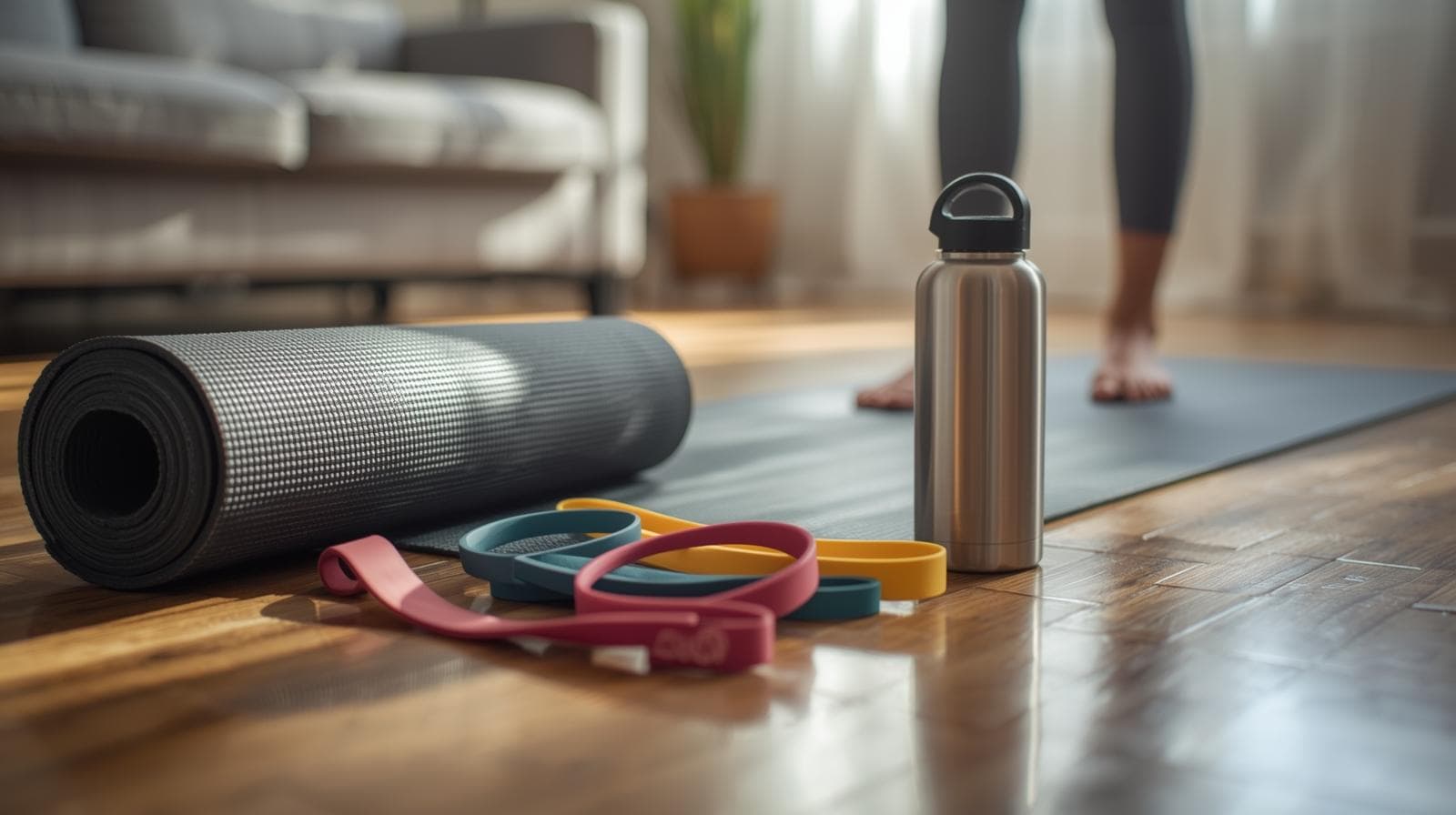
Understand first
Education-first • not medical adviceOpen the deep dive
What’s going on
Movement does not require a complex programme or a large equipment setup. Regular walking, simple strength work and gradual progression form a practical base for most everyday movement goals.
Why it matters
The routine that is repeated matters more than the impressive routine that is abandoned. Equipment is useful when it removes a real barrier or expands what an established habit can do.
Common causes
- All-or-nothing plans that are difficult to sustain.
- Increasing volume or intensity too quickly.
- Treating tracking and equipment as the activity itself.
No-spend first steps
- Build regular walking into the week.
- Add short bodyweight strength sessions before buying a large setup.
- Increase time, distance or load gradually.
If you’re buying anything, use this calm checklist
- Name the limitation the equipment will solve before purchasing.
- Prioritise fit, comfort, returns and long-term usefulness.
- Start with the smallest setup that supports the routine.
General information only. If you have symptoms or a medical condition, consult a qualified clinician.
Strength training does not need a perfect gym programme or a room full of equipment. It needs a small set of movements that you can repeat and gradually make more demanding.
UK physical-activity guidance recommends muscle-strengthening work for the major muscle groups on at least two days each week, alongside aerobic activity. That does not mean every strength session needs to be long or complicated.
Start here: Movement → • Movement shortlist →
The minimum useful structure
Build each session around a few movement patterns rather than dozens of exercises:
- squat or lunge — sit-to-stand, squat to a chair, split squat
- push — wall, kitchen-counter, bench or floor press-up
- pull — resistance-band row or another controlled pulling movement if you have suitable equipment
- hinge — hip hinge, glute bridge or a light loaded hinge once technique is comfortable
- carry or trunk work — optional, depending on space and equipment
You do not need every variation. Choose one movement from each useful pattern and keep it stable long enough to learn it.
A 20-minute beginner template
Start with a brief warm-up: walk around, move the joints you are about to use and perform an easier version of the first exercise.
Then try:
- Sit-to-stand or squat to a chair — 2 sets
- Incline press-up — 2 sets
- Band row — 2 sets, if you have a safely anchored band
- Glute bridge or hip hinge — 2 sets
- Optional carry or simple trunk exercise — 1–2 sets
Choose a number of repetitions you can perform with control while leaving some effort in reserve. Technique should remain stable rather than deteriorating to reach an arbitrary target.
How to progress without overcomplicating it
Progress one variable at a time:
- add a repetition or two
- use a slightly harder exercise variation
- add a small amount of resistance
- add a set
- slow the lowering phase when appropriate
You do not need to make every exercise harder every session. If the existing version still feels challenging and controlled, repeat it.
Bodyweight first, equipment second
Bodyweight movements can cover a large part of a beginner routine. Equipment becomes useful when it solves a limitation.
Resistance bands can help when:
- pulling movements are otherwise difficult to train at home
- you want more resistance without storing weights
- you need a portable option
Dumbbells or adjustable weights can help when:
- bodyweight lower-body exercises have become too easy
- you want straightforward progressive loading
- you have a safe place to train and store them
Before buying, name the exercise or limitation the equipment will solve.
Compare simple home-strength options →
What about soreness?
New strength work can cause temporary muscle soreness, particularly when the exercise or volume is unfamiliar. More soreness is not the goal and is not proof of a better session.
Start conservatively, especially if you have been inactive. Give yourself enough recovery to repeat the routine with good control rather than making the first session so hard that it disrupts the rest of the week.
Common mistakes
Starting with too much
A five-day training plan is not better than a two-day plan if you stop after a fortnight. Establish the smallest repeatable schedule first.
Changing exercises constantly
Novelty makes progression hard to judge. Keep the main movements stable for several weeks unless something is uncomfortable or impractical.
Buying before practising
Do a few sessions with bodyweight and household space first. You will learn quickly what equipment would actually make the routine better.
Treating tracking as training
Logging workouts can help, but the log is not the workout. A simple note of the exercise, variation, sets and repetitions is enough for most beginners.
A realistic weekly pattern
One simple option is:
- Day 1: full-body strength
- Day 2: walking or other normal movement
- Day 3: full-body strength
- other days: ordinary walking, active travel, sport or recovery as appropriate
The exact week can move around your work and family schedule. The useful target is consistency across months rather than a perfect calendar.
When to get professional advice
If you have a medical condition, significant pain, a recent injury, have not exercised for a long time, or are unsure what intensity is appropriate, NHS guidance recommends speaking to a GP or appropriate health professional before starting or materially increasing exercise.
Stop and seek appropriate medical help for concerning symptoms such as chest pain, fainting or severe unexpected breathlessness.
Source
General educational guidance only. Strength exercises should be appropriate to your current ability, health and surroundings. Use stable equipment and safe anchoring where resistance bands are involved.
Make the next decision easier
Occasional Wild & Well notes with practical actions, useful comparisons and no-pressure product guidance.
By subscribing you agree to our privacy policy. Unsubscribe anytime.
Related reading
Keep learning — then choose the simplest next step.
 Explainer
Food labels without the noise: a practical UK guide
How to compare UK food labels using ingredients, per-100g nutrition, front-of-pack colours and serving size without turning shopping into a nutrition exam.
 Explainer
Water Filter Buying Guide (UK): choose the right type first
A practical UK guide to choosing between jug, countertop, under-sink, RO, gravity and portable water filters — with replacement cost and maintenance checks before you buy.
 Explainer
Filter replacement costs: the simple way to estimate your yearly spend (UK)
A practical UK guide to the real ownership cost of air, water and shower filters — with a simple yearly-cost formula and direct routes to maintained shortlists.
 Explainer
Hard water in the UK: what it affects (and what it doesn’t)
A calm, UK-specific guide to hard water: what to expect, common myths, and how to decide between no-spend comfort changes, shower filtration, drinking-water filtration and softening.
 Explainer
Creatine (UK): what it is, how to take it, and who it’s for
A simple, evidence-led guide to creatine monohydrate: benefits, dosing, timing, and common myths.
 Insight
A simple weekly movement plan (beginners)
Why movement improves health (even without weight loss) — and a realistic 7‑day plan you can repeat: walking + two strength sessions + short mobility.
Related shortlists
If you’re comparing products, these are built to be quick: what matters, what to avoid, and a short shortlist.
Movement partner shortlist (UK)
Partner links for barefoot footwear, home strength basics and tracking.
In: Movement gear
Resistance bands (home workouts)
Shortlist for bands that cover most home training.
In: Movement gear
Fitness trackers (beginners, UK)
Simple tracking without overthinking.
In: Movement gear
Barefoot walking boots (UK)
A practical barefoot boots guide: transition safely and avoid overload.
In: Movement gear
Gut health supplements (beginners)
Shortlist for simple, low‑risk gut support options.
In: Supplements (beginner‑friendly)
Yoga mats (grip + comfort)
A short list focused on grip and comfort.
In: Movement gear