

Understand first
Education-first • not medical adviceWhy this matters (expanded)
What’s going on
Movement does not require a complex programme or a large equipment setup. Regular walking, simple strength work and gradual progression form a practical base for most everyday movement goals.
Why it matters
The routine that is repeated matters more than the impressive routine that is abandoned. Equipment is useful when it removes a real barrier or expands what an established habit can do.
Common causes
- All-or-nothing plans that are difficult to sustain.
- Increasing volume or intensity too quickly.
- Treating tracking and equipment as the activity itself.
No-spend first steps
- Build regular walking into the week.
- Add short bodyweight strength sessions before buying a large setup.
- Increase time, distance or load gradually.
If you’re buying anything, use this calm checklist
- Name the limitation the equipment will solve before purchasing.
- Prioritise fit, comfort, returns and long-term usefulness.
- Start with the smallest setup that supports the routine.
General information only. If you have symptoms or a medical condition, consult a qualified clinician.
If you want better health, movement is one of the highest-return things you can do. Not because you need to “burn calories” — but because movement affects:
- blood sugar and insulin sensitivity
- blood pressure and circulation
- sleep quality
- mood and stress
- joint health and back pain risk
This is a simple plan that works for most people because it’s repeatable.
Don’t chase the perfect workout. Chase the repeatable one.
Why movement helps even if your weight doesn’t change
Body weight is only one outcome. Movement improves “how your body runs” through:
- better mitochondrial and cardiovascular function (walking/cardio)
- stronger muscles that act like a glucose sponge (strength training)
- improved joint range and tissue tolerance (mobility)
Even small improvements can feel like:
- less stiffness
- better energy
- fewer cravings
- fewer aches
The simplest weekly plan
Daily baseline
- Walk 20–40 minutes most days.
- If that sounds impossible, start with 10 minutes after one meal.
Two short strength sessions
Pick any two non-consecutive days (e.g. Tue + Fri):
Session A (20–30 min)
- Squat pattern (chair sit-to-stand) — 3 x 8–12
- Push pattern (incline push-ups) — 3 x 6–12
- Pull pattern (band row or doorframe row) — 3 x 8–12
- Carry (grocery bags) — 3 x 30–60 sec
Session B (20–30 min)
- Hinge pattern (hip hinge / light deadlift pattern) — 3 x 8–12
- Press pattern (pike push-up or dumbbell press) — 3 x 6–12
- Split squat / step-ups — 3 x 8–12
- Core (dead bug / plank) — 3 x 20–40 sec
Two 5–10 minute mobility slots
Pick two days (or add them after your walk):
- hips: 90/90 or hip flexor stretch
- thoracic spine: open books
- ankles/calves: calf stretch
How to progress without getting injured
Use a simple rule:
- When a set feels too easy, add one rep next time.
- When you hit the top of the rep range comfortably, add a small load (heavier band/dumbbell).
Keep 1–3 reps “in the tank” most of the time.
Common barriers (and simple fixes)
“I don’t have time.” Start with 10 minutes after one meal. That’s enough to build the habit.
“I get sore and quit.” Do less. Soreness is a sign you did too much too soon.
“I don’t know what to do.” Use this page as your template for 8 weeks. Don’t change it weekly.
When gear actually helps
You can do the plan with no equipment. If you want one upgrade:
- a set of resistance bands or one adjustable dumbbell
Related reads
Reference
Make the next decision easier
Occasional Wild & Well notes with practical actions, useful comparisons and no-pressure product guidance.
By subscribing you agree to our privacy policy. Unsubscribe anytime.
Related reading
Keep learning — then choose the simplest next step.
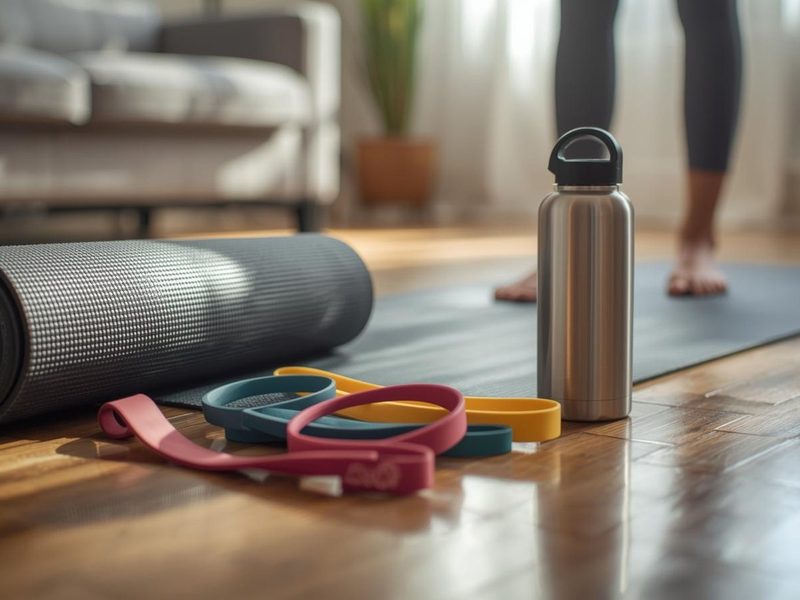 Explainer
Home strength basics for busy people
A simple UK home-strength framework using bodyweight first, progressive resistance second and the smallest routine you can repeat.
 Explainer
Food labels without the noise: a practical UK guide
How to compare UK food labels using ingredients, per-100g nutrition, front-of-pack colours and serving size without turning shopping into a nutrition exam.
 Insight
Air Purifier for Pet Dander UK: A Healthier-Home Guide
Evidence-led UK guidance for reducing pet-allergen exposure at home, choosing an air purifier, cleaning routines, bedroom boundaries and filter costs.
 Explainer
Air Purifier for Pollen UK: What Helps During Hay Fever Season?
A practical UK guide to reducing pollen indoors, deciding whether an air purifier is worthwhile, sizing it for a bedroom and budgeting for filters.
 Insight
Dog Supplements UK: An Evidence-First Guide to Claims and Labels
How to assess UK dog supplements for joints, digestion, skin and general wellness without confusing ingredient marketing with product evidence.
 Insight
Healthy Weight and Exercise for Dogs UK: A Practical Routine
A UK guide to dog body condition, portions, treats, daily movement, tracking and signs that need veterinary advice.
Related shortlists
If you’re comparing products, these are built to be quick: what matters, what to avoid, and a short shortlist.
Movement partner shortlist (UK)
Partner links for barefoot footwear, home strength basics and tracking.
In: Movement gear
Barefoot walking boots (UK)
A practical barefoot boots guide: transition safely and avoid overload.
In: Movement gear
Walking shoes for daily steps (UK)
Comfort‑first shortlist for regular steps.
In: Movement gear
Resistance bands (home workouts)
Shortlist for bands that cover most home training.
In: Movement gear
Activewear basics (UK)
Comfort‑first basics that make movement easier.
In: Movement gear
Yoga mats (grip + comfort)
A short list focused on grip and comfort.
In: Movement gear