
Understand first
Education-first • not medical adviceOpen the deep dive
What’s going on
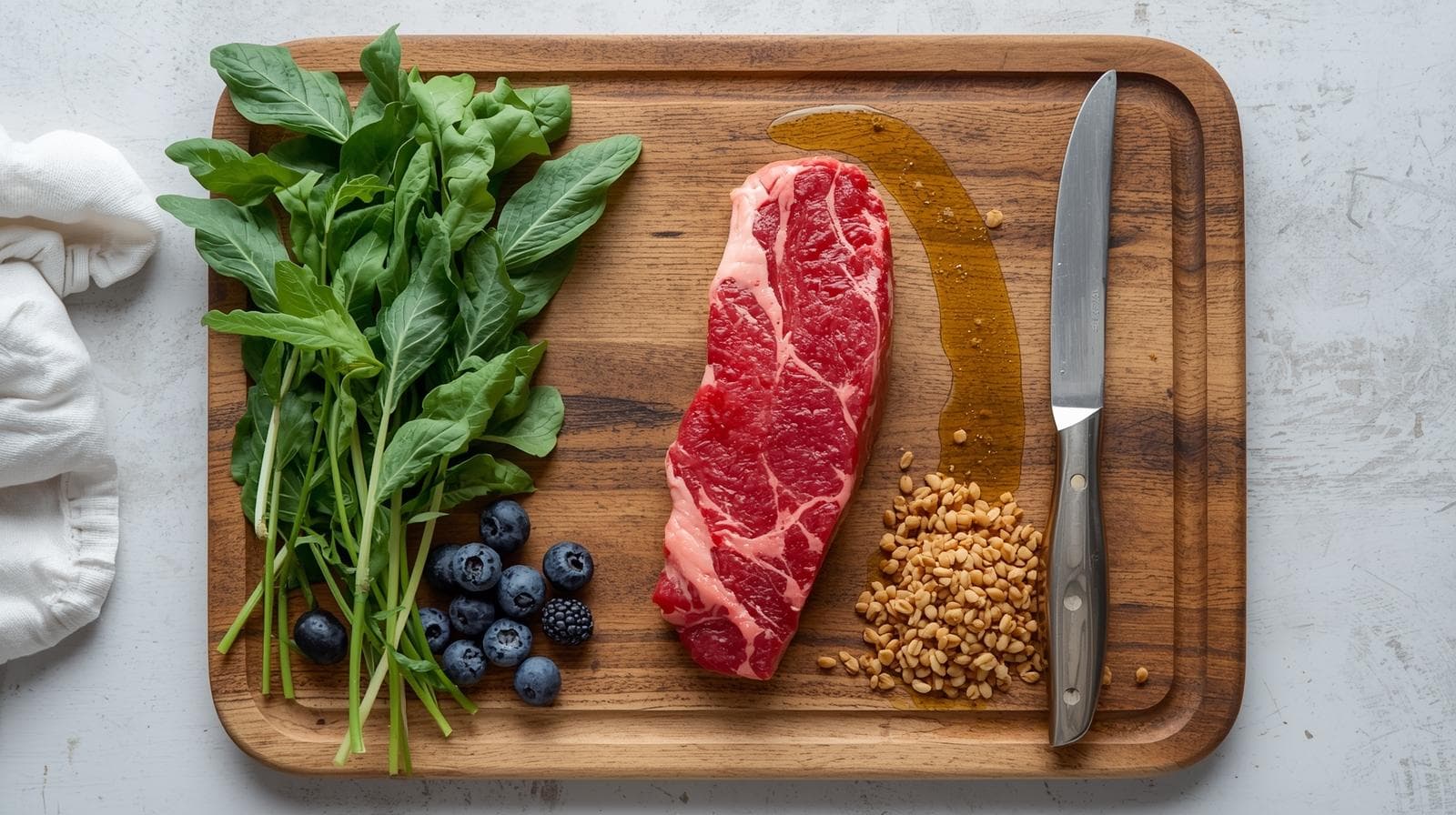
Nutrition gets confusing because marketing is loud and the basics are quiet. A practical starting point is adequate protein and fibre, a varied diet built mostly around minimally processed foods, and habits that fit normal life.
Why it matters
Simple, repeatable food choices tend to be more useful than complicated rules or constantly changing products. Supplements can have a role, but they should not displace the food and routine basics.
Common causes
- Convenience patterns crowding out useful staple foods.
- Packaged foods being judged by marketing language rather than their overall fit.
- Overcomplicated plans that are difficult to repeat.
No-spend first steps
- Add one useful protein source to a meal that is currently light on protein.
- Add a fibre-rich food such as beans, oats, fruit or vegetables regularly.
- Keep a small set of easy staples available for busy days.
If you’re buying anything, use this calm checklist
- Use convenience products to solve a real time or access problem.
- Keep supplement claims conservative and check suitability where relevant.
- Prefer products that complement rather than replace a workable diet.
General information only. If you have symptoms or a medical condition, consult a qualified clinician.
Food labels are most useful when they help you compare similar products. They are less useful when they turn every packet into a verdict on whether a food is “good” or “bad”.
The simplest approach is to read the label in layers: what the food is, what it contains, then the nutrition information that matters for the choice you are making.
Start here: Nutrition → • Food-first shortlist →
The 30-second supermarket scan
1. Start with the name and ingredients
The ingredients list tells you what the product is actually made from. Ingredients are listed in descending order by weight, so the first few ingredients make up the largest share of the product.
Allergens must be emphasised on the label. If you have an allergy or medically diagnosed intolerance, use the allergen information rather than relying on front-of-pack marketing language.
2. Compare like with like per 100g or 100ml
UK pre-packed foods normally provide nutrition information per 100g or 100ml, often with an additional per-portion figure. The per-100g column is particularly useful when comparing two versions of the same type of food because the manufacturer's suggested serving sizes may differ.
Depending on the decision, look at:
- protein — useful when comparing foods you are choosing specifically as a protein source
- fibre — where it is declared, useful when comparing breads, cereals, snacks and similar foods
- sugars — especially when comparing similar sweetened products
- saturated fat — useful for comparing products within the same category
- salt — particularly relevant for sauces, ready meals, processed meats and savoury snacks
- energy — useful context, but not a complete measure of food quality
No single number tells you whether a food fits your diet.
3. Use front-of-pack colours as a shortcut, not the whole decision
Many UK products use red, amber and green front-of-pack nutrition labels. They give a quick indication of whether a product is high, medium or low in fat, saturated fat, sugars and salt.
They are useful for comparing similar products quickly. A red marker does not mean a food is forbidden; it means that nutrient is high and gives you context for frequency and portion size.
Claims on the front are not the same as the nutrition panel
Words such as “high protein”, “low fat” or other nutrition and health claims are subject to rules, but a valid claim still describes only one aspect of the product.
For example, a high-protein snack may also be high in salt or added sugars. A low-fat product may not automatically be the better choice for what you need. Turn the pack over and compare the full label.
Portion size: useful, but check whose portion it is
Manufacturers may show nutrition per serving as well as per 100g. The serving figure is useful only if it resembles the amount you will actually eat.
If two similar products use different serving sizes, use the per-100g figures for the cleaner comparison.
A practical decision hierarchy
When choosing between similar packaged foods, ask:
- What job is this food doing? A main meal, protein source, snack, convenience option or treat?
- What are the main ingredients? Do they make sense for that job?
- Which nutrition figures matter here? Do not optimise every number simultaneously.
- Will I actually eat and enjoy it? A theoretically perfect food that sits unused in the cupboard is not useful.
- Does the convenience justify the cost? Convenience can be valuable if it helps a good routine survive busy days.
What not to do
- Do not judge a whole diet from one ingredient you recognise as “bad”.
- Do not assume a long ingredient list automatically makes a product unhealthy.
- Do not assume “natural”, “organic” or premium-looking packaging tells you the nutritional profile.
- Do not compare unrelated foods as if they should have the same label numbers.
- Do not let label reading become a reason to fear normal food.
A simple weekly experiment
Pick one category you buy often — cereal, yoghurt, bread, ready meals or snacks — and compare two or three options using the same criteria. Once you know your preferred option, stop analysing it every week.
The goal is less decision fatigue, not more.
Sources
- NHS: How to read food labels
- GOV.UK: Food labelling — giving food information to consumers
- GOV.UK: Nutrition, health claims and supplement labelling
This is general educational information, not personalised dietary or medical advice. If you need to avoid an ingredient for an allergy, medical condition or medication interaction, use appropriate professional guidance rather than a general nutrition rule.
Make the next decision easier
Occasional Wild & Well notes with practical actions, useful comparisons and no-pressure product guidance.
By subscribing you agree to our privacy policy. Unsubscribe anytime.
Related reading
Keep learning — then choose the simplest next step.
 Explainer
Home strength basics for busy people
A simple UK home-strength framework using bodyweight first, progressive resistance second and the smallest routine you can repeat.
 Explainer
Water Filter Buying Guide (UK): choose the right type first
A practical UK guide to choosing between jug, countertop, under-sink, RO, gravity and portable water filters — with replacement cost and maintenance checks before you buy.
 Insight
UK 72-Hour Food Plan: What to Keep at Home Without Stockpiling
A practical UK guide to keeping three days of familiar, shelf-stable food at home without panic buying or specialist survival meals.
 Explainer
Filter replacement costs: the simple way to estimate your yearly spend (UK)
A practical UK guide to the real ownership cost of air, water and shower filters — with a simple yearly-cost formula and direct routes to maintained shortlists.
 Explainer
Hard water in the UK: what it affects (and what it doesn’t)
A calm, UK-specific guide to hard water: what to expect, common myths, and how to decide between no-spend comfort changes, shower filtration, drinking-water filtration and softening.
 Explainer
Bone broth: benefits, what it replaces, and an easy way to use it
A practical guide to bone broth: where it can help, what it replaces well, and how to use it as a simple savoury staple.
Related shortlists
If you’re comparing products, these are built to be quick: what matters, what to avoid, and a short shortlist.
High‑protein meal prep (UK)
Meal prep as a bridge on busy weeks: reduce decision fatigue, keep it food-first.
In: Nutrition staples (UK)
Ethical meat delivery (UK)
A guide to higher‑welfare meat delivery: what to look for and how to plan freezer space.
In: Nutrition staples (UK)
Extra virgin olive oil (UK)
A shortlist focused on freshness and sensible buying.
In: Nutrition staples (UK)
Organic oats (UK)
Jumbo/rolled/steel‑cut: simple options, no overwhelm.
In: Nutrition staples (UK)
Chia seeds (UK)
Simple add‑ins for oats, yoghurt, smoothies.
In: Nutrition staples (UK)
Flaxseed (UK)
Ground vs whole: easy, practical shortlist.
In: Nutrition staples (UK)