
Understand first
Education-first • not medical adviceOpen the deep dive
What’s going on
UK tap water is regulated, while household water concerns range from taste and limescale to a specific contaminant question. Different treatment formats solve different jobs, so the reason for filtering needs to come first.
Why it matters
Choosing by the actual job avoids paying for unnecessary stages or assuming one filter solves every water issue. Maintenance and replacement availability are part of performance in real life.
Common causes
- Hard-water minerals causing limescale rather than a drinking-water safety problem.
- Taste or odour differences from supply, plumbing or storage.
- Confusion between softening, filtration and specific contaminant-reduction claims.
No-spend first steps
- Check your local supplier’s water-quality information for context.
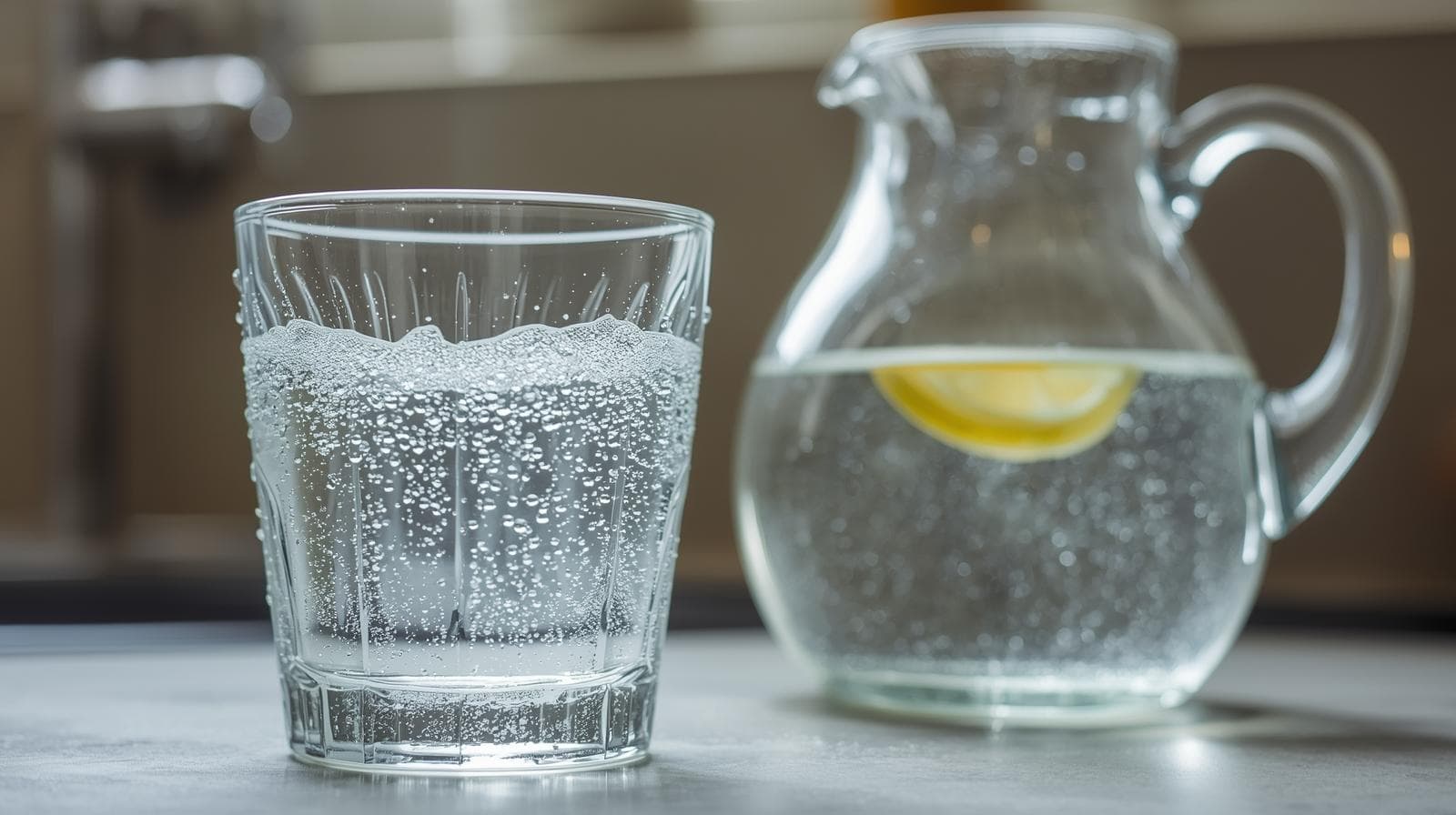
- If taste is the issue, try chilling tap water in a covered container first.
- Descale kettles and appliances appropriately when limescale is the main nuisance.
If you’re buying anything, use this calm checklist
- Choose the format around the job and household volume required.
- Check the exact reduction claim and supporting testing or certification where relevant.
- Price replacement filters and maintenance before committing.
General information only. If you have symptoms or a medical condition, consult a qualified clinician.
The easiest way to overspend on water filtration is to compare products before deciding what job the filter actually needs to do. Start with the use case, then look at testing, replacement cost and how much maintenance you will realistically keep up with.
Fast route: Compare water-filter formats → • See the maintained filtration shortlist →
Start with the problem, not the product
Ask which of these best describes what you want:
| Your priority | Start by comparing | Main trade-off |
|---|---|---|
| Better-tasting everyday tap water with no installation | Jug or countertop | More frequent refilling and cartridge changes |
| Filtered kitchen water on demand | Under-sink carbon / multi-stage | Installation, space and ongoing filter cost |
| Higher-involvement broad filtration | Reverse osmosis (RO) | Installation, wastewater, space and replacement filters |
| Useful capacity without plumbing | Gravity system | Counter space, slower flow and cleaning |
| Travel, commuting or days out | Filter bottle | Smaller capacity and cartridge life |
| Shower-water filtration | Shower filter | Not the same as whole-home water softening |
If you already know which route fits, go straight to the Water Filtration Shortlist → and compare the current partner options in that category.
Hard water needs a separate decision
Hard water and drinking-water filtration are often mixed together, but they are not the same buying problem. If visible scale around taps, kettles and shower screens is your main concern, first read our UK hard-water guide →.
A shower cartridge should not be treated as a whole-home softener. If your goal is specifically shower-water filtration, use the shower-filter guide → instead of buying a generic filter based on a hard-water claim.
Jug and countertop filters
These are usually the lowest-friction starting point because there is little or no installation. They suit people who want filtered drinking water but do not want to alter plumbing.
Before buying, check:
- how much filtered water the household actually uses each day;
- the price and UK availability of replacement cartridges;
- the manufacturer’s specific testing or reduction claims;
- whether refilling and cleaning the unit will become annoying in normal use.
Next step: Compare jug and countertop options →
Under-sink filtration
Under-sink systems make more sense when filtered water is used frequently and you want it available directly at the kitchen. The unit price is only part of the decision: installation, space and replacement filters are the long-term commitment.
Measure the available space and price at least a year of replacement filters before committing.
Next step: Compare under-sink and RO options →
Reverse osmosis (RO)
RO is a higher-involvement route and should solve a real need rather than simply sounding like the “most complete” option. Check the system’s installation requirements, wastewater ratio, flow, replacement schedule and total annual running cost.
For a worked example, see our Waterdrop G3P600 RO guide →.
Gravity filtration
Gravity systems can be useful when you want more capacity without plumbing. The trade-off is footprint, cleaning and slower processing. Make sure the system fits the space where you will actually keep and use it.
Next step: Compare gravity filtration →
Portable filter bottles
For commuting, travel and days away from home, a bottle can solve the problem with far less cost or installation than a household system. Compare capacity, flow and replacement-cartridge availability rather than choosing only on the bottle price.
Next step: Compare portable filters →
Four checks before spending money
1. Look for specific evidence
Prefer clear, checkable testing or certification information for the substances you care about. Broad “removes impurities” language tells you very little.
2. Calculate the replacement cost
A cheaper unit can become the expensive choice if cartridges cost more or need replacing often. Our filter replacement-cost guide → explains what to include, and the water-filter running-cost calculator → lets you compare the annual cost of systems on the same basis.
3. Be realistic about maintenance
Every system works within a maintenance routine. If you know you will not clean a gravity unit or replace an under-sink cartridge on schedule, choose a lower-friction format.
4. Avoid buying more filtration than you need
A simple system that gets used and maintained is more useful than a complex one that becomes inconvenient.
The simplest decision path
If you are still unsure, use the main Water Filters UK guide → to choose the format first. Once you know the route, the maintained Water Filtration Shortlist → is where Wild & Well keeps the current partner options together.
That gives you a cleaner buying sequence:
problem → format → evidence + running cost → shortlist → merchant
Some shortlist and product links are affiliate links. If you buy through them, Wild & Well may earn a commission at no extra cost to you. The educational route comes first so you can decide whether you need a product at all.
Make the next decision easier
Occasional Wild & Well notes with practical actions, useful comparisons and no-pressure product guidance.
By subscribing you agree to our privacy policy. Unsubscribe anytime.
Related reading
Keep learning — then choose the simplest next step.
 Explainer
Filter replacement costs: the simple way to estimate your yearly spend (UK)
A practical UK guide to the real ownership cost of air, water and shower filters — with a simple yearly-cost formula and direct routes to maintained shortlists.
 Explainer
Hard water in the UK: what it affects (and what it doesn’t)
A calm, UK-specific guide to hard water: what to expect, common myths, and how to decide between no-spend comfort changes, shower filtration, drinking-water filtration and softening.
 Insight
Damp & Mould in UK Rentals: the practical playbook
A practical renter checklist for damp and mould: measure humidity, reduce moisture, improve ventilation, document the pattern, then compare dehumidifiers only when humidity control is the right tool.
 Explainer
Healthy Air at Home: A Practical UK Guide
A practical UK home-air guide: reduce pollution at source, control moisture, improve ventilation and only then compare purifiers or dehumidifiers when they solve the right problem.
ExplainerWinter Humidity Guide (UK): Dry Air, Condensation or Damp?
A practical UK winter humidity guide: measure first, separate dry-air problems from condensation and damp, then choose ventilation, humidification or dehumidification appropriately.
 Explainer
Home strength basics for busy people
A simple UK home-strength framework using bodyweight first, progressive resistance second and the smallest routine you can repeat.
Related shortlists
If you’re comparing products, these are built to be quick: what matters, what to avoid, and a short shortlist.
Water filtration partner shortlist (UK)
Direct partner links for bottles, jugs, under‑sink systems and shower options.
In: Home essentials
Water filters (UK)
Jugs vs under‑sink vs countertop: keep it simple, check running costs.
In: Home essentials
Ethical meat delivery (UK)
A guide to higher‑welfare meat delivery: what to look for and how to plan freezer space.
In: Nutrition staples (UK)
Shower filters (UK hard water)
Comfort‑first shortlist for hard‑water homes.
In: Home essentials
Fitness trackers (beginners, UK)
Simple tracking without overthinking.
In: Movement gear
High‑protein meal prep (UK)
Meal prep as a bridge on busy weeks: reduce decision fatigue, keep it food-first.
In: Nutrition staples (UK)