
Understand first
Education-first • not medical adviceOpen the deep dive
What’s going on
Indoor air quality is shaped by particles (dust, pollen, smoke), moisture (damp/mould risk), and gases (cooking fumes, fragranced products). The aim is to reduce exposure in the rooms you actually use.
Why it matters
Poor air can worsen comfort and may aggravate allergies or asthma in sensitive households. The practical goal is to identify the pollutant or moisture problem first, then use source control, ventilation or filtration appropriately.
Common causes
- Poor ventilation, especially during colder weather.
- Cooking fumes without effective extraction.
- Damp rooms, slow-drying laundry and unresolved moisture sources.
- Smoke, pollen, dust and fragranced products adding particles or irritants.
No-spend first steps
- Use extraction during cooking and showering and ventilate strategically.
- Measure humidity when damp or condensation is part of the problem.
- Reduce pollutants at source where practical.
- Dust and vacuum regularly in the rooms that matter most.
If you’re buying anything, use this calm checklist
- For particles, match purifier airflow and filtration to the actual room.
- For excess moisture, address leaks and ventilation before considering dehumidification.
- Check noise, electricity and replacement-filter costs before buying.
General information only. If you have symptoms or a medical condition, consult a qualified clinician.
Healthy indoor air is usually less about buying one “perfect” device and more about solving the right problem in the right order.
Quick routes: Air Quality topic → • Air Quality shortlist → • Dehumidifier guide →
Start with the problem, not the product
Most household air-quality complaints fall into four broad groups:
- Particles — dust, pollen, smoke and fine cooking particles.
- Moisture — condensation, damp and mould risk.
- Ventilation — stale air, steam and pollutants building up indoors.
- Sources — cooking, candles, sprays, fragranced products and other indoor emissions.
The useful question is: which one is dominant in your home?
Quick decision table
| What you notice | First move | Product route if still needed |
|---|---|---|
| Dust, pollen, smoke particles | Reduce source + ventilate appropriately | Air purifier |
| Wet windows, musty rooms, high RH | Find moisture source + improve extraction | Dehumidifier |
| Cooking fumes | Use lids, extractor and ventilation | Purifier only as a secondary measure |
| Strong fragrance / spray exposure | Remove or reduce the source | Usually no device required first |
| Stale bedroom air | Improve ventilation pattern | Purifier only if particles are also a problem |
1. Control obvious sources first
This is the highest-value step because a machine should not be asked to compensate for avoidable pollution.
Useful examples:
- use pan lids and an effective extractor while cooking
- avoid unnecessary aerosol sprays
- reduce heavily fragranced products if they bother your household
- avoid routine indoor smoke sources where possible
- vacuum and dust regularly, particularly in bedrooms
Source control is usually cheaper and more effective than trying to filter everything after it enters the room.
2. Get ventilation right
Ventilation matters most after high-moisture or high-pollution activities such as cooking and showering.
A practical pattern is:
- use mechanical extraction while the activity is happening
- continue it for a period afterwards
- use short, purposeful window ventilation where appropriate
Leaving one window slightly open all day is not automatically better than targeted ventilation, especially in cold weather.
3. Measure humidity if damp or dryness is part of the problem
A simple hygrometer can prevent buying the wrong device.
If readings stay high and condensation is recurring, focus on moisture management. If readings stay very low, a dehumidifier would obviously be the wrong purchase.
For a fuller decision tree, use the Winter humidity guide →.
If damp is persistent, go to Damp & mould: the practical playbook →.
4. When an air purifier makes sense
An air purifier is most relevant when airborne particles are the problem.
That can include:
- pollen
- household dust
- smoke particles
- traffic-related particulate pollution entering from outside
- particles generated by cooking
Before buying, check:
- room size
- stated CADR or equivalent airflow performance
- noise at the speed you will actually use
- replacement-filter cost
- whether filters are reliably stocked in the UK
If allergies are the main issue, start with the Air purifiers for allergies guide →.
For more choice, use the maintained Air Quality shortlist →.
5. When a dehumidifier makes sense
A dehumidifier removes moisture; it does not remove the cause of a leak, repair poor ventilation or act as an air purifier.
It becomes more useful when:
- RH remains high for sustained periods
- condensation keeps returning
- indoor laundry drying is unavoidable
- ventilation improvements alone are not enough
Use the Best dehumidifiers for damp & mould guide → before comparing current products.
6. Replacement cost matters
Purifiers are filter-based products, so the purchase price is not the full cost.
Before buying, estimate:
annual filter cost = filter price × replacements per year
Then compare that with the machine price and how long you expect to own it.
Use the Filter replacement-cost guide → before committing to a model with expensive or difficult-to-source filters.
Room-by-room priorities
Kitchen
Control cooking emissions at source first. Extraction and pan lids do more than relying on a purifier alone.
Bathroom
Moisture is usually the priority. Use extraction and keep steam from spreading into the rest of the home.
Bedroom
Focus on ventilation, dust control, bedding hygiene and any allergy triggers. A quiet purifier can make sense if airborne particles are a known problem.
Living room
Think about candles, sprays, open windows near traffic, pets and general dust load before choosing equipment.
The simplest buying rule
- Particles problem? Compare air purifiers.
- Moisture problem? Compare dehumidifiers.
- Dry-air problem? Measure first before considering humidification.
- Source problem? Remove or reduce the source before buying anything.
Where to go next
- Air Quality shortlist →
- Air purifiers for allergies →
- Best dehumidifiers for damp & mould →
- Winter humidity guide →
- Filter replacement costs →
Wild & Well’s role is to help you narrow the problem before you spend. Once the problem is clear, the shortlists are the right place to compare current partner options.
Make the next decision easier
Occasional Wild & Well notes with practical actions, useful comparisons and no-pressure product guidance.
By subscribing you agree to our privacy policy. Unsubscribe anytime.
Related reading
Keep learning — then choose the simplest next step.
 Insight
Damp & Mould in UK Rentals: the practical playbook
A practical renter checklist for damp and mould: measure humidity, reduce moisture, improve ventilation, document the pattern, then compare dehumidifiers only when humidity control is the right tool.
ExplainerWinter Humidity Guide (UK): Dry Air, Condensation or Damp?
A practical UK winter humidity guide: measure first, separate dry-air problems from condensation and damp, then choose ventilation, humidification or dehumidification appropriately.
 Explainer
Water Filter Buying Guide (UK): choose the right type first
A practical UK guide to choosing between jug, countertop, under-sink, RO, gravity and portable water filters — with replacement cost and maintenance checks before you buy.
 Explainer
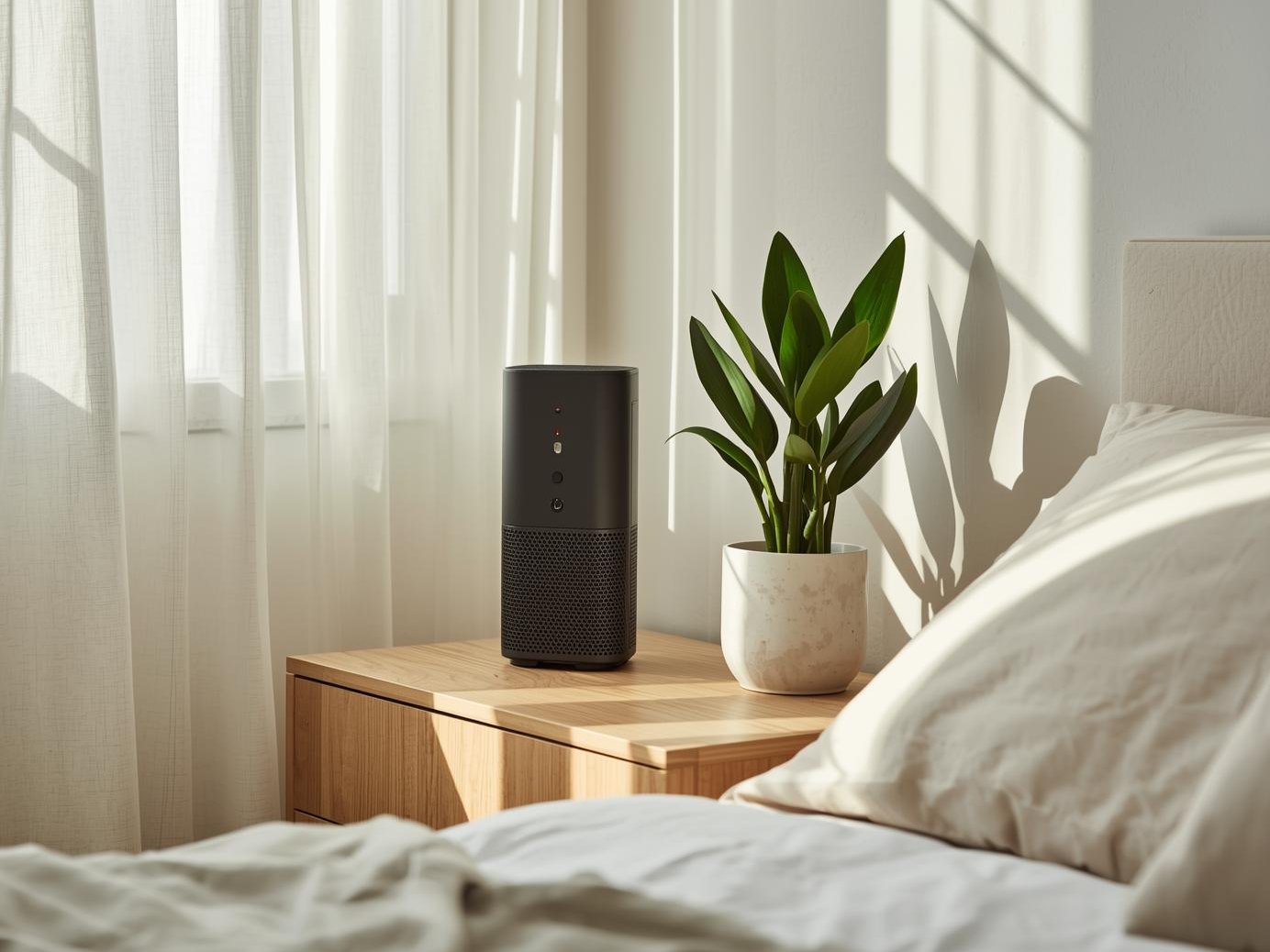
Air Purifiers for Small Rooms: What Matters
A practical UK guide to choosing an air purifier for a bedroom, home office or small flat: size the room, compare useful-speed noise and price replacement filters before buying.
 Explainer
Filter replacement costs: the simple way to estimate your yearly spend (UK)
A practical UK guide to the real ownership cost of air, water and shower filters — with a simple yearly-cost formula and direct routes to maintained shortlists.
 Explainer
Hard water in the UK: what it affects (and what it doesn’t)
A calm, UK-specific guide to hard water: what to expect, common myths, and how to decide between no-spend comfort changes, shower filtration, drinking-water filtration and softening.
Related shortlists
If you’re comparing products, these are built to be quick: what matters, what to avoid, and a short shortlist.
Air quality partner shortlist (UK)
Direct partner links for air purifiers, dehumidifiers, filters and airflow options.
In: Home essentials
Air purifiers for allergies (UK)
Shortlist for common UK rooms with clear size guidance and trade‑offs.
In: Home essentials
Air purifiers for small flats (UK)
Compact options that make sense in smaller rooms.
In: Home essentials
Ethical meat delivery (UK)
A guide to higher‑welfare meat delivery: what to look for and how to plan freezer space.
In: Nutrition staples (UK)
High‑protein meal prep (UK)
Meal prep as a bridge on busy weeks: reduce decision fatigue, keep it food-first.
In: Nutrition staples (UK)
Extra virgin olive oil (UK)
A shortlist focused on freshness and sensible buying.
In: Nutrition staples (UK)