
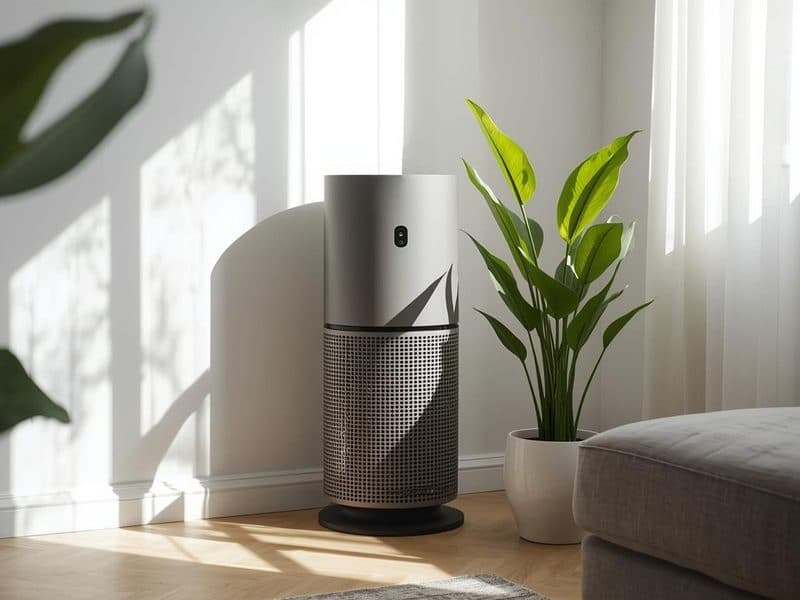
Understand first
Education-first • not medical adviceOpen the deep dive
What’s going on
Indoor air quality is shaped by particles (dust, pollen, smoke), moisture (damp/mould risk), and gases (cooking fumes, fragranced products). The aim is to reduce exposure in the rooms you actually use.
Why it matters
Poor air can worsen comfort and may aggravate allergies or asthma in sensitive households. The practical goal is to identify the pollutant or moisture problem first, then use source control, ventilation or filtration appropriately.
Common causes
- Poor ventilation, especially during colder weather.
- Cooking fumes without effective extraction.
- Damp rooms, slow-drying laundry and unresolved moisture sources.
- Smoke, pollen, dust and fragranced products adding particles or irritants.
No-spend first steps
- Use extraction during cooking and showering and ventilate strategically.
- Measure humidity when damp or condensation is part of the problem.
- Reduce pollutants at source where practical.
- Dust and vacuum regularly in the rooms that matter most.
If you’re buying anything, use this calm checklist
- For particles, match purifier airflow and filtration to the actual room.
- For excess moisture, address leaks and ventilation before considering dehumidification.
- Check noise, electricity and replacement-filter costs before buying.
General information only. If you have symptoms or a medical condition, consult a qualified clinician.
Outdoor smoke, wildfire haze and short-term pollution events can change the way you should ventilate your home.
Most of the time, fresh outdoor air is useful. During a period of unusually poor outdoor air quality, the priority can temporarily switch to reducing how much polluted air enters the home while keeping one or more rooms as clean as practical.
First: check whether outdoor air is actually poor
Do not seal the house because of a vague smell or social-media post alone.
Use official or reputable local air-quality information where available. Conditions can change significantly through the day and by location.
Reduce unnecessary outdoor air entry
When outdoor smoke or particle pollution is high:
- keep windows and external doors closed as much as practical;
- avoid running extract systems unnecessarily if they strongly pull outdoor air in elsewhere;
- postpone vigorous outdoor exercise if official advice recommends doing so;
- ventilate again when outdoor conditions improve.
Homes still need ventilation in normal conditions, so this is a temporary response to a short-term event rather than a permanent strategy.
Create one cleaner room
If one person in the household is especially sensitive, it can be easier to focus on one bedroom or living room rather than trying to purify the entire house.
Choose a room with:
- doors and windows that close properly;
- relatively little traffic in and out;
- enough space for the people who need to use it;
- an air purifier sized appropriately for the room if you have one.
Where a HEPA air purifier helps
A properly sized particle filter can reduce airborne particulate matter in a room when it is run appropriately.
For smoke and fine particles, look beyond marketing terms and check:
- whether the unit uses genuine particle filtration such as HEPA;
- clean-air delivery or equivalent performance data;
- the room size used for performance claims;
- noise at useful fan speeds;
- replacement-filter cost and availability.
A purifier that is silent because it is always left on its lowest setting may deliver much less clean air than the headline specification suggests.
See our Air Quality topic hub and UK air-purifier shortlists for practical comparisons.
What an air purifier does not do
An air purifier is not a complete substitute for ventilation and it does not solve every indoor pollutant.
Particle filters are designed primarily for particles. Gases and volatile compounds are a different problem and depend on the amount and type of activated carbon or other gas-phase media used.
Likewise, an air purifier does not fix a damp source, water leak or active mould problem. Those require source control.
Avoid making indoor air worse
During a smoke or pollution event, reduce avoidable indoor particle sources too.
Examples include:
- smoking or vaping indoors;
- burning candles or incense;
- frying or high-smoke cooking without suitable extraction;
- unnecessary solid-fuel burning.
This matters because indoor-generated particles add to whatever is entering from outdoors.
If you already own a purifier
Use it effectively before buying another one.
- Check the filter condition.
- Run it continuously in the room you are prioritising.
- Increase fan speed when pollution is high if noise is tolerable.
- Keep airflow around the intake and outlet clear.
- Replace filters according to condition and manufacturer guidance rather than ignoring them indefinitely.
Buying route: Blueair vs Meaco-style products
Wild & Well already covers brands in this area through our affiliate partners, but brand name alone is not enough.
For a smoke/particle use-case, we will compare models on particle-cleaning performance, room size, noise, filter cost and ongoing availability.
Meaco is also relevant where the real household issue is damp or humidity rather than smoke, because a dehumidifier and an air purifier solve different problems.
That distinction is important: particle pollution, humidity and mould are related to indoor comfort but they are not the same problem.
A simple action plan
- Confirm outdoor conditions.
- Close windows temporarily if outdoor particle levels are unusually high.
- Reduce indoor particle sources.
- Focus on one cleaner room if needed.
- Run a suitable purifier effectively if you own one.
- Ventilate again once outside air improves.
The Wild & Well rule
Control the source first, then use equipment for the part it can actually solve.
That keeps an air purifier in its proper role: useful filtration equipment, not a magic box for every air-quality problem.
Make the next decision easier
Occasional Wild & Well notes with practical actions, useful comparisons and no-pressure product guidance.
By subscribing you agree to our privacy policy. Unsubscribe anytime.
Related reading
Keep learning — then choose the simplest next step.
 Insight
UK 72-Hour Household Emergency Kit: What You Actually Need
A calm, practical UK checklist for three days of short-term disruption: water, food, lighting, power, communication, first aid and hygiene.
 Insight
UK 72-Hour Food Plan: What to Keep at Home Without Stockpiling
A practical UK guide to keeping three days of familiar, shelf-stable food at home without panic buying or specialist survival meals.
 Insight
UK Power Cut Preparation: What Actually Helps at Home
A practical UK guide to short power cuts: lighting, phone power, food safety, warmth, communication and when a larger battery system may be worth considering.
 Insight
72-Hour Household Water Plan (UK): Storage, Filtration and What to Do in an Outage
A practical UK guide to keeping enough drinking water for 72 hours, storing it safely, and understanding when filtration can and cannot help.
 Insight
Natural Candles UK: What Matters for Indoor Air
A practical UK guide to candle wax, fragrance, ventilation and the indoor-air trade-offs that matter more than the word natural.
 Explainer
Home strength basics for busy people
A simple UK home-strength framework using bodyweight first, progressive resistance second and the smallest routine you can repeat.
Related shortlists
If you’re comparing products, these are built to be quick: what matters, what to avoid, and a short shortlist.
Air quality partner shortlist (UK)
Direct partner links for air purifiers, dehumidifiers, filters and airflow options.
In: Home essentials
Air purifiers for allergies (UK)
Shortlist for common UK rooms with clear size guidance and trade‑offs.
In: Home essentials
Air purifiers for small flats (UK)
Compact options that make sense in smaller rooms.
In: Home essentials
Dog wellness & pet-allergy shortlist (UK)
Evidence-led dog-home options, starting with approved pet-dander air filtration.
In: Home essentials
Water filtration partner shortlist (UK)
Direct partner links for bottles, jugs, under‑sink systems and shower options.
In: Home essentials
Meaco Arete One 25L (UK)
A featured UK option for damp + laundry drying, with a simple sizing checklist.
In: Home essentials